BEGIN:VCALENDAR
VERSION:2.0
PRODID:-//Anesthesiology//NONSGML Events//EN
CALSCALE:GREGORIAN
X-ORIGINAL-URL:https://anesthesiology.wustl.edu/events/
X-WR-CALDESC:Anesthesiology - Events
BEGIN:VEVENT
UID:20260720T1849Z-1784573398.7894-EO-65426-1@10.73.10.117
STATUS:CONFIRMED
DTSTAMP:20260807T165847Z
CREATED:20260807T160128Z
LAST-MODIFIED:20260807T160128Z
DTSTART;TZID=America/Chicago:20260828T114500
DTEND;TZID=America/Chicago:20260828T130000
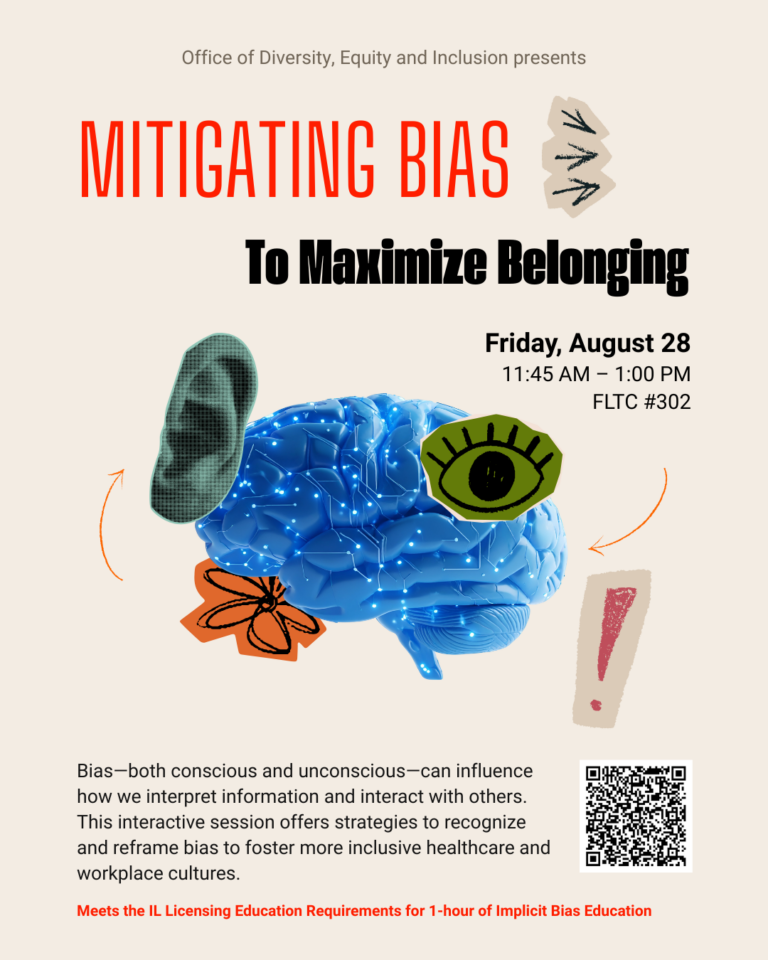
SUMMARY: Mitigating Bias to Maximize Belonging – Part I
DESCRIPTION: Meets the IL Licensing Education Requirements for 1-hour of Im
 plicit Bias Education. Bias—both conscious and unconscious—can influence ho
 w we interpret information\, make decisions\, and interact with patients\, 
 learners\, colleagues\, and communities. Learning to recognize and interrup
 t these patterns is an important step toward creating environments where in
 dividuals feel respected\, included\, and able to contribute fully. […]
X-ALT-DESC;FMTTYPE=text/html: <p><img class="alignnone size-full wp-image-6
 5705" src="https://anesthesiology.wustl.edu/app/uploads/2026/08/MitigatingB
 ias-0828-768x960-1.png" alt="" width="768" height="960" /></p><p class="isS
 electedEnd"><em><strong data-start="513" data-end="600">Meets the IL Licens
 ing Education Requirements for 1-hour of Implicit Bias Education.</strong><
 /em></p><p class="isSelectedEnd">Bias—both conscious and unconscious—can in
 fluence how we interpret information\, make decisions\, and interact with p
 atients\, learners\, colleagues\, and communities. Learning to recognize an
 d interrupt these patterns is an important step toward creating environment
 s where individuals feel respected\, included\, and able to contribute full
 y.</p><p class="isSelectedEnd">This interactive session invites participant
 s to reflect on how bias can shape everyday interactions\, workplace cultur
 e\, and healthcare experiences. Together\, we will explore how common patte
 rns of “algorithmic thinking” can reinforce bias\, how bias and power inter
 sect in professional and clinical environments\, and how individuals can pa
 use\, reflect\, and respond more intentionally in the moment.</p><p>Through
 out the session\, participants will explore:</p><ul><li class="isSelectedEn
 d">How algorithmic thinking can contribute to individual bias</li><li class
 ="isSelectedEnd">The impact of bias on inclusion\, belonging\, and workplac
 e culture</li><li class="isSelectedEnd">The relationship between bias and p
 ower</li><li class="isSelectedEnd">Practical strategies for mitigating the 
 harms of bias in everyday interactions and decision-making</li></ul><p clas
 s="isSelectedEnd">Relevant to individuals across WashU Medicine regardless 
 of role or rank\, this session may be particularly valuable for healthcare 
 professionals seeking to strengthen inclusive practices in clinical\, educa
 tional\, and workplace settings.</p><p class="isSelectedEnd">Registration i
 s required. Please complete <a href="https://diversity.med.wustl.edu/events
 /calendar/mitigating-bias-to-maximize-belonging-part-i-2/">this form</a> to
  register for this session. For questions\, contact <a href="mailto:yokokiy
 oi@wustl.edu">yokokiyoi@wustl.edu</a>.</p>
CATEGORIES:Climate &amp\; Culture,Featured Events,School of Medicine
ORGANIZER;CN="Admin":MAILTO:wordpress@wustl.edu
URL;VALUE=URI:https://anesthesiology.wustl.edu/events/event/mitigating-bias
 -to-maximize-belonging-part-i-2/
END:VEVENT
BEGIN:VTIMEZONE
TZID:America/Chicago
BEGIN:DAYLIGHT
TZOFFSETFROM:-0600
TZOFFSETTO:-0500
DTSTART:20260308T080000
TZNAME:CDT
END:DAYLIGHT
END:VTIMEZONE
END:VCALENDAR
