Welcome to the Department of Anesthesiology at WashU Medicine!
Congratulations on choosing a career in anesthesiology! Residency is a transformative chapter in your professional journey and selecting the right training program is one of the most important decisions you will make. Whether your goals include private practice, sub-specialization within academia, physician-scientist research, or departmental leadership, WashU Medicine will provide the clinical training, mentorship, and opportunities to help you succeed. We seek residents who are intellectually curious, compassionate, collaborative, and committed to providing exceptional patient care.
As an intern at WashU Medicine, you will rotate through a broad range of specialties (surgery, internal medicine, emergency medicine, the surgical ICU, and the cardiothoracic ICU) building the clinical foundation and interdisciplinary relationships that will serve you throughout residency. You will learn alongside experienced faculty who are passionate educators, as well as senior residents and fellows who are invested in your success.
These early experiences foster the collaborative culture that defines our program. The relationships you develop with co-interns across specialties become invaluable as you work together during your clinical anesthesia years; whether caring for patients in the operating room, responding to anesthesia STATs and Code Blues, or managing life-threatening traumas in the emergency department.
Our intern curriculum also includes protected educational time dedicated specifically to anesthesia training. During the year, you will work closely with faculty and residents in the pre-op clinic, inpatient adult and pediatric pain services, simulation center, ICUs, and during a dedicated month-long anesthesia rotation. Many of the faculty you meet early in training become mentors throughout residency and beyond.
During your CA-1 through CA-3 years, you will gain comprehensive experience across the full spectrum of adult and pediatric anesthesiology. WashU Medicine residents benefit from early exposure to subspecialty anesthesia and are prioritized for high-value educational cases that promote progressive autonomy and clinical confidence. Every three weeks, each residency class has a protected Wednesday free from clinical responsibilities for a dedicated Education Day, featuring curriculum tailored to each stage of training.
As the primary academic medical center for the region, Barnes-Jewish Hospital cares for an exceptionally diverse patient population with a wide range of medical complexity. From routine ambulatory procedures to highly specialized surgical cases, the breadth and volume of your clinical experience will prepare you to confidently care for patients in any practice setting. Along the way, you will develop not only technical expertise and sound clinical judgment, but also lifelong friendships with your co-residents.
Life outside the hospital is equally rewarding. St. Louis offers the amenities of a vibrant metropolitan area with an exceptional quality of life. The city boasts a thriving food, arts, and cultural scene, while remaining one of the most affordable major cities in the country. Barnes-Jewish Hospital is located adjacent to beautiful Forest Park (one of the nation’s largest urban parks—bigger than Central Park!) where many residents enjoy running, biking, walking, and outdoor recreation throughout the year. Affordable housing, short commute times, and easy access to parks and hiking trails allow residents to enjoy life beyond work, whether that means traveling, exploring the city with friends, or building a home with family and pets.
Many of us can remember an anesthesiologist who inspired us to pursue this specialty—someone whose calm presence, technical skill, sound judgment, and compassion left a lasting impression. At WashU Medicine, you will develop those same qualities through rigorous clinical training, outstanding mentorship, and a supportive learning environment. By the time you graduate, you will be prepared to confidently navigate the most challenging clinical situations and become the physician that patients, colleagues, and future trainees rely on.
If you train here, you can thrive anywhere.
We look forward to getting to know you throughout the interview season.
Sincerely,
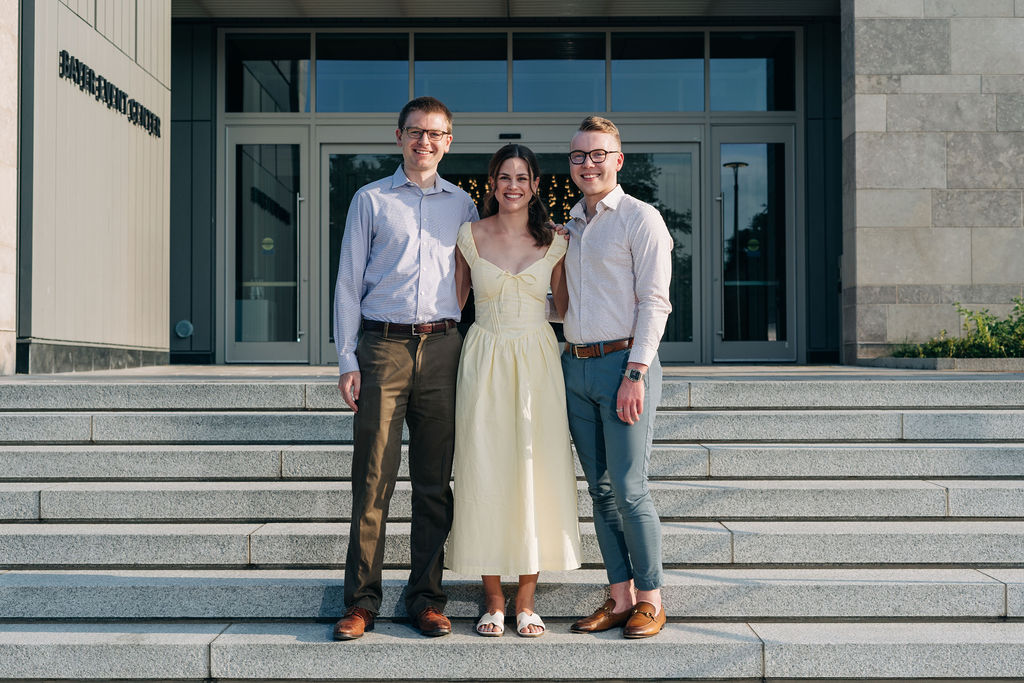
2026-27 Chief Residents
Reid Reding, MD
Julia Saak, MD
Andrew Schaffer, MD