Dr. Michael Avidan Celebrated With the Foundation’s 2025 President’s Achievement Award (Links to an external site)
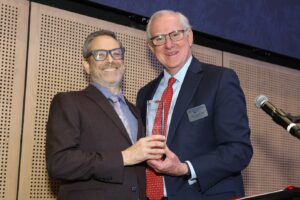
Michael Avidan, MBBCh, chair of the WashU Medicine Department of Anesthesiology and anesthesiologist-in-chief at Barnes-Jewish Hospital, has been selected to receive the 2025 President’s Achievement Award from The Foundation for Barnes-Jewish Hospital.
Psychedelics disrupt normal link between brain’s neuronal activity and blood flow (Links to an external site)
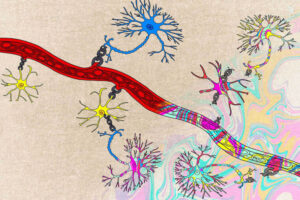
WashU Medicine researchers, including Dr. Jordan McCall from the Department of Anesthesiology, have shown that certain psychedelic compounds break the link between neurological functions and blood flow in the brain.
WashU Medicine’s head student coach (Links to an external site)

Physician, educator Amjad Musleh mentors aspiring physicians in compassionate care.
Kannampallil, Wiley named medical informatics fellows (Links to an external site)

WashU Medicine researchers recognized for significant contributions to data science.
Creed to study dopamine system changes in chronic nerve pain (Links to an external site)

Meaghan Creed, an associate professor of anesthesiology at WashU Medicine, has received a $3.3 million five-year grant from the National Institute on Drug Abuse to study dopamine system changes underlying depression symptoms in people with chronic neuropathic pain.
Six APPs named finalists for 2025 March of Dimes Heroes in Action Awards

The Department of Anesthesiology is proud to announce that six of its Advanced Practice Providers (APPs) have been named finalists for the March of Dimes Heroes in Action 2025 awards.
Pradhan named the Russell D. and Mary B. Shelden Professor of Anesthesiology
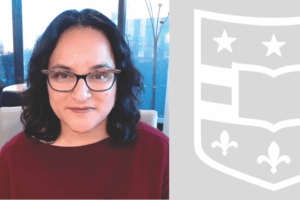
Amynah Pradhan, PhD, has been appointed to the Russell D. and Mary B. Shelden Professorships in Anesthesiology at WashU Medicine.
Haroutounian named the Russell D. and Mary B. Shelden Professor of Anesthesiology
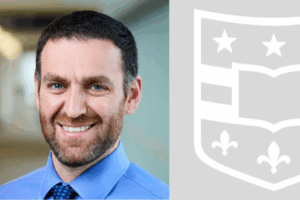
Simon Haroutounian, PhD, MSc, has been appointed to the Russell D. and Mary B. Shelden Professorship in Anesthesiology.