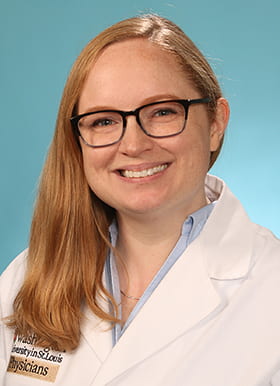
Medical School: WashU Medicine
Residency: WashU Medicine ASAP graduate with a fellowship in Pain Management, 2018
Current Role: Assistant Professor of Anesthesiology, WashU Medicine
Research: Role of gut microbiota in the development and/or persistence of chronic pain.
Grants: IARS Mentored Research Award 2019
What does a normal day-in-the-life as a physician-scientist look like for you?
Life is never boring as a physician-scientist as there is no such thing as a normal day. I am non-clinical about 75% of the time and clinical 25% of the time where I work as an interventional pain physician.
When I am in the pain clinic, I see and treat patients with chronic pain. I prescribe medications, refer patients to physical therapy, and perform a variety of interventions from epidural injections to spinal cord stimulation (neuromodulation).
When I am non-clinical, I attend lab meetings, enroll participants in my study, write papers/grants, and analyze samples in the lab.
How did the Academic Scholars Advancement Program (ASAP) help you get to where you are today?
ASAP allowed me to focus my career as an interventional pain management physician at an earlier stage while helping me apply for external funding. Becoming a pain fellow as a CA-2 allowed me to hone my diagnostic and procedural skills in a supportive setting while I established a research career plan. I was (and still am) surrounded by like-minded colleagues who give advice on grant applications and research proposals.
The ASAP support is critical for success in a challenging career path. In ASAP, you are surrounded by departmental and peer support. Through ASAP, I was able to obtain additional training as a clinical researcher so that I could move into translational and clinical research.