Yoshida receives ASCI’s 2024 Emerging-Generation Award
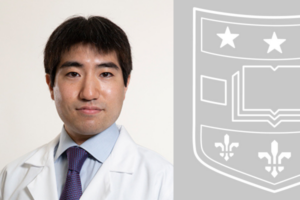
Mitsukuni Yoshida, MD, PhD, a current resident physician in the department’s Academic Scholar Advancement Program (ASAP), has been selected for the prestigious 2024 Emerging-Generation (E-Gen) Awards by the American Society for Clinical Investigation (ASCI).
Ablordeppey and Herrera honored with 2024 Drum Major Award
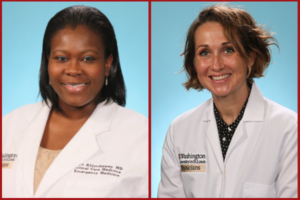
Enyo Ablordeppey, MD, MPH, FACEP, FCCM, and Erin Herrera, CRNA, were honored with the prestigious Drum Major Award on Tuesday, January 16, recognizing their outstanding efforts as advocates and upstanders.
Decoding Reinforcing Behaviors and Reward Seeking: New Study on Brain’s Reward Pathways
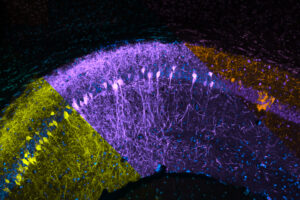
New study led by Jose Moron-Concepcion, PhD, Khairunisa Mohamad Ibrahim, PhD, and Nicolas Massaly, PhD, delves into the roles of two key brain areas: the dorsal hippocampus (dHPC) and the nucleus accumbens (NAc), and how they interact to govern our pursuit of rewards and positive stimuli in various situations.
Understanding the sex-based differences in anesthetic sensitivity
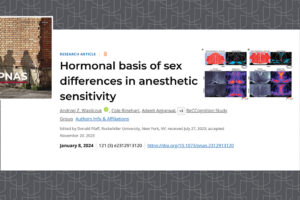
Groundbreaking research uncovers sex-based differences in anesthetic sensitivity, suggesting that women may require different anesthetic management from men due to a resistance influenced by hormonal factors like testosterone.
Thanking Clinicians for 365 Days of Service
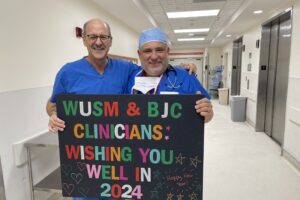
On Christmas Day this year, Dr. David Perlmutter, the Dean of WUSM, accompanied Dr. Avidan around various clinical areas, where they personally thanked WUSM and BJC clinicians for their unwavering service and dedication.
Njoku appointed Board Chair for the Foundation for Anesthesia Education and Research

Dolores Njoku, MD, has recently been appointed as the Board Chair for the Foundation for Anesthesia Education and Research (FAER).
Department celebrates CRNA Class of 2023
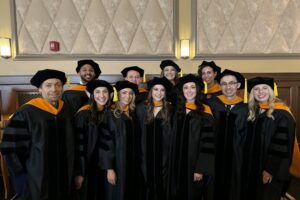
The Goldfarb School of Nursing, including the Nurse Anesthesia Program, celebrated its commencement ceremony on Friday, December 15, 2023, at the Stifel Theatre.
Neurosciences on the rise (Links to an external site)
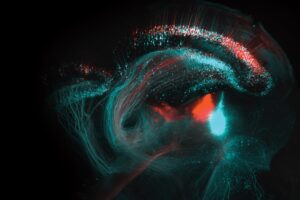
Understanding the brain and nervous system is one of the most pressing challenges in medicine. To meet this challenge, WashU Medicine has built and is opening the Neuroscience Research Building, a 609,000-square-foot facility expected to be among the nation’s premier neuroscience research hubs.