The Well-being Word

Associate Vice-Chair of Well-Being
Hi Friends,
Last month, my husband ended up with appendicitis that landed him in the hospital for nearly three weeks! As stressful and chaotic as that time was, one of my key takeaways was how incredibly thankful I was to have access to the university’s Caregiver Leave, which allowed me to step away from work to care for my family.
The benefits provided by WashU are more than just for show. They are incredibly supportive policies in place so that we can care for ourselves and our families in the same way that we care for our patients.
Using your benefits is not a luxury, it’s an essential part of caring for yourself and creating a healthier, more sustainable work life balance! Many people hesitate to use benefits because they feel guilty. However, I can assure you, as someone who initially had a lot of “guilt” about being off work for a few weeks, the ship continues to sail without you! Work can usually wait; caring for yourself and your loved ones cannot.
These benefits exist because your well-being is essential to the mission of this department and university.
WashU offers many resources to help nurture your health, creativity, and balance beyond the workday. There’s a whole world of benefits beyond leave! These perks are designed to support your passions, wellbeing, and life outside the hospital.
As we step into 2026, make yourself a priority. Explore some of WashU’s hidden gems and discover new ways to recharge, grow, and enjoy more of what matters to you and your family!
Yours in wellness,
What’s ahead?
- Dec. 15 – Jan. 16 | Holiday Lights Recycling
- Jan. 19-23 | MLK Commemoration Week
- Feb. 19-24 | Lab Supply Swap – WashU labs are invited to donate surplus lab supplies and equipment and/or acquire needed lab materials for free.
- April 11 | Supporting Women of WUDA retreat (more information to come soon!)
- May 26 | C.R. Stephen Lecture featuring Max B. Kelz, MD, PhD (more information to come soon!)
WashU Benefits
- Access the makerspaces, shops and studios to use 3D printers, Cricut presses, printmaking studios and more.
- The Harvey Media Center has full professional recording studios, including equipment that you can rent (often for free).
- WashU has a dedicated primary care clinic (WUCare) for employees and their families.
- Whether you’re considering pregnancy, adoption, fostering or fertility treatment, or already have children under five, BenefitBump provides personalized guidance to help you understand and make the most of your WashU benefits and related resources.
- The Sumer’s Rec Center offers massage therapy at great prices.
- Are you getting married? Did you know you can rent out Graham Chapel on the Danforth campus and even host a reception in some of the spaces on campus?
- Will you be starting the stressful adventure of trying to find summer camp for your kids soon? WashU has already made a vetted list for you!
- Engage in St. Louis sports and theater events with discounted tickets. View the Engage website for details on St. Louis Signature and WashU-centric opportunities.
- Explore the list of suppliers who offer special pricing to WashU faculty & staff.
- Many gyms near the campuses also offer WashU employees discounts on membership packages.
- Did you know that the New York Times subscription is now available to all faculty, staff, and students? Learn more»
- The Office of Sustainability recycles items that are donated or discarded through its Surplus Reuse and Donation Programs—such as office or dorm furniture, office supplies and lab equipment—to interested departments or employees.
- The WashU Medicine Farmers Market is held March through December on Thursdays from 10:00am – 2:00pm, rain or shine.
- Attn Bikers: Register your bike, get discounts on safety gear, attend a free bike tune-up, and more!
Department Snapshots



2025 WELCCOME Awards
We are excited to announce this year’s WELCCOME Award recipients and celebrate some of the individuals who make our department a more collaborative, supportive, and connected community. The nominations were uplifting and reflected the thoughtful, impactful work happening across our teams every day, as well as the strong culture of connection and collaboration we share.
We invite you to visit the WELCCOME Awards website below to read the nominations and join us in recognizing some of the colleagues whose daily actions make a meaningful difference.
SAFE Accolades
The Department of Anesthesiology is proud to recognize the 12 individuals who have received accolades through the SAFE (Supporting a Fair Environment) Reporting platform in October 2025.

SAFE Reporting is an integral part of WashU Medicine’s ongoing efforts to ensure that we uphold the highest standards of professionalism in our workplaces and learning environments. It enables clinicians, scientists, educators, staff, residents, fellows, postdocs, students, and other members of our community to safely report either positive or concerning behaviors, with or without identifying themselves.
This tool is a key resource for recognizing outstanding contributions and flagging unprofessional or abusive behaviors. By utilizing the SAFE Accolades tool, members of our community help to cultivate an atmosphere where everyone feels valued, respected, and empowered to thrive.
A Day in the Life of Emine Aysu Salviz, MD
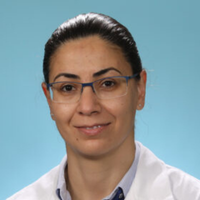
Aysu’s days begin before sunrise, when the house is quiet and she mentally maps out everything ahead—OR cases, block lists, her daughter Goksu’s full schedule, and the countless details that keep life moving. With a cup of coffee in hand, she shifts smoothly into the rhythm that defines her world: caring for patients, teaching trainees, supporting her family, and balancing the many roles she loves. Read her below Day in the Life for a glimpse into her day.
My day begins at 5:15 a.m., when the alarm goes off and the world outside is still dark and quiet. Before leaving the bed, I mentally run through the day’s entire program, including the Operating Room (OR) schedule, the regional anesthesia block list, my daughter Goksu’s at- and after-school schedule with basketball, dance, and/or cross-country practices, and whether I remembered to move the laundry to the dryer. Afterward, while making my first cup of coffee of the day, I make sure the alarm is set for Goksu to wake up, that her computer and phone are charged for the day, and that the cats have enough water and food.
On a routine regional anesthesia day, with 3-6 first starts, I generally leave home around 6 a.m. before Goksu even wakes up. Her daily schedule is usually discussed the night before to ensure we’re on time and not to miss any part of her busy practice, competition, and game schedule. She also has piano and Spanish lessons on weekends, and her weekly schedule could rival that of any OR.
I arrive at the hospital around 6:15 a.m. and step into the busy preoperative area, with beeping monitors, colleagues gathering information and consent for the first cases, and ultrasound machines being rolled to the bays where we have our first block patients. As a regional anesthesiologist, no two mornings feel the same. Some days begin with a full block board, so we run from bay to bay to be on time to complete spinal, interscalene, supraclavicular, adductor, popliteal, femoral, fascia iliaca compartment, single-shot blocks or catheter placements… all lined up like a puzzle waiting to be solved. Other days start easier and calmer, with some teaching time periods, walking residents through appropriate block choices, alternatives, and the anatomy and/or sonoanatomy behind each technique.
On busy regional anesthesia days, we may complete over 30 different types of blocks, which requires informing and consenting at least 20 patients, positioning them, and performing the blocks with a good amount of bedside theoretical and practical education. There is a particular rhythm to regional anesthesia—a balance between precision, efficiency, timeliness, and calmness—that I have come to appreciate deeply. We sometimes draw anatomy pictures, review ultrasound images, scan patients with different body habitus for more extended periods to understand differences and variations, plan the approach, and troubleshoot when necessary. Additional discussions on contraindications and the management of patients with comorbidities also take place in between, and it is always so satisfying to observe the residents’ hand-eye coordination skills improve from morning to afternoon and from the beginning of the rotation to the end. Afternoons are generally smoother and more predictable; mornings feel like a sprint between bays and the OR. Moreover, I follow the POD-2 OR routine by reviewing charts, meeting with patients, discussing perioperative anesthesia plans, and coordinating with my in-room colleagues and surgeons.
The time I leave the hospital depends entirely on the schedule. Some days, I am out early around 3:00 p.m. while on other days, I finish just in time to shift from physician to chauffeur. Either way, I am always back in “mom mode” the moment I pick up Goksu. During the day, she takes care of herself with the help of “early morning calls” to make sure she is awake and leaves home on time to walk to school, and “afternoon calls” to check her safely being at home, completing homework, having her meals and being ready for me to drive her to daily activities. If we are lucky to have my husband here in St. Louis (he lives and works in Istanbul but comes very frequently and stays with us for 1-4 weeks each time), even though I make and follow the programs, he mainly takes care of all her activities and the meals. We both like to be part of all her activities, so we are happy to watch not only the games and competitions but also the practices. She is 12 years old and is kind of at an age when she shares a bit less than before, so we are trying to be present and witness as many of her cheerful, up-and-down moments as possible.
Trips on the way and dinners include our moments to share daily routine. How the day has been, anything new, whether homework is done, what the plan is for the following day, and how we will manage it, especially if I have LR or a call, and a backup plan is needed. I already make these weekly plans to eliminate last-minute chaos at home, but I need to discuss them again to be on the same page. Dinners mainly include homemade Turkish food when at home to reserve some space to every kind of food and cuisine for outside dinners.
In between the other plans or by the time the house quiets down, I take a final look at the next day’s cases, answer a few messages and e-mails, attend Zoom meetings and complete some education/academic work such as reviewing articles, preparing some regional anesthesia board exam questions, getting ready for upcoming presentations/lectures and resident/fellow evaluations.
The above mentioned schedule is my daily routine other than the content changes depending on working as a regional attending in South or the Center for Advanced Medicine, and also the OR schedule. This reflects my steady, meaningful rhythm in life that has grown over time.
As weekdays are hectic, we frequently postpone family and friend calls and meetings, cinema, concerts, games, shows, and/or outdoor dinners to the weekends as much as possible. Even though keeping up with all this work, school, sports, and social activities is sometimes challenging, I always remember why I chose this path, why I work hard, and try to balance my motherhood and medicine. I always feel fortunate to do what I love, live the life I wanted, and have my work and family life be the most rewarding parts of my life.
Moving to the United States to try how things would go for us and then deciding to settle down have been significant changes, sometimes very easy and sometimes very hard and complicated. Taking steps one by one, accepting that we must be stubborn with each new change, being positive and open to novelty made us stronger and happier along the way. Every time I felt overwhelmed, I tried to step back and see the beautiful big picture: I had reached my dreams. This immediately makes me happy and places a smile on my face.
Yes, it was about moving to the United States, but also about moving forward into the unknown. Inclusion in this department as an international specialist has been one of the most significant transitions of my career and my life. I remember feeling both excited and uncertain during those early months. Then, in a very short time, I understood how fortunate I have been to have everybody in this department be welcoming, understanding, helpful, and supportive. Being part of this department has given me not just a place to work, but a place to belong, and has quickly became my professional home. I have been seen, understood and valued, which have been the most critical factors for me to stay here.
I have changed a lot, learned to keep up in situations I could not have imagined before, better understood the language and culture, and become even more responsible and much more resilient. Nevertheless, as the big picture grows and becomes much more beautiful over time, the journey has been worth it for sure. Now, we have supportive colleagues, friends, life, and a future here as a family, and we are grateful for them. Every day, whether I’m holding an ultrasound probe, placing an IV, getting together with my friends, driving from school to practice or from practice to practice, or cheering from a gym stand, we are, as a family, happy about the life we have built here.


PIA SAFE Corner
A recent Stanford “prehab” study showed that patients who received coaching before surgery—nutrition, activity, mindset, coping skills—had fewer complications and recovered better. The message is simple: preparing before stress helps us recover after it.
The holidays are fun but often stressful, and the same principle applies. Building resilience ahead of time—prioritizing sleep, practicing mindfulness, or talking with a peer “coach” about expectations and worries—can make a big difference in how we handle and bounce back from challenging moments.
Here are some resources to help prepare for & navigate stress:
- WashU Resources:
- Related Well-being Podcast episodes:
PIA SAFE is a peer-based program in the Department of Anesthesiology designed to address concerns about negative behaviors, conflicts, and microaggressions experienced by department members. Check out the PIA SAFE website or email Erin Herrera (erinherrera@wustl.edu) to learn more!

The Well-developed Podcast
When you’re not at your best, it’s hard to learn or perform well. The Well-developed Podcast offers a space to reflect, recharge, and explore how bringing your whole self to work can boost your personal and professional growth. Discover how your unique strengths, values, and preferences can support your well-being and development.
Have an idea for a podcast topic? Share your suggestions using the form at the bottom of our webpage. Thanks for influencing our podcast’s evolution!

Take 2 for the Team
This quick and easy platform encourages everyone in the department to take just two minutes out of their day to send a note of appreciation to a colleague. Accessible via the departmental INTRAnet, the app delivers your message of thanks straight to your teammate’s inbox.
Take a moment today to celebrate the people who help make our department a better place to work. A small gesture can go a long way.