The 2026 Annual Meeting, presented by the International Anesthesia Research Society (IARS) and the Society of Critical Care Anesthesiologists (SOCCA), was held in Montreal, Canada, from May 1–3. Faculty, staff, and trainees from WashU Medicine Anesthesiology were well represented, contributing across poster sessions, panels, and national award competitions.
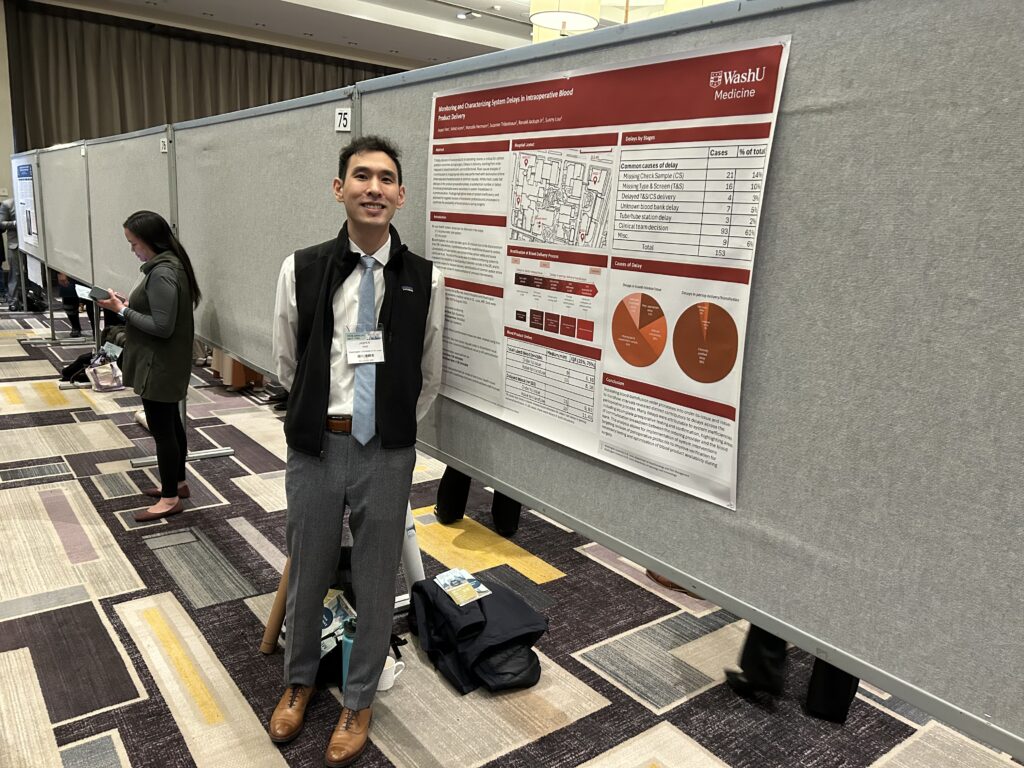
The meeting opened on Friday with poster presentations, where two CA-1 residents, Jasper Han, MD, and Cindy Li, MD, presented their research. Han’s poster, “Monitoring and Characterizing System Delays in Intraoperative Blood Product Delivery,” examined factors contributing to delays in blood product availability during surgery and identified opportunities to optimize communication and coordination during perioperative care.
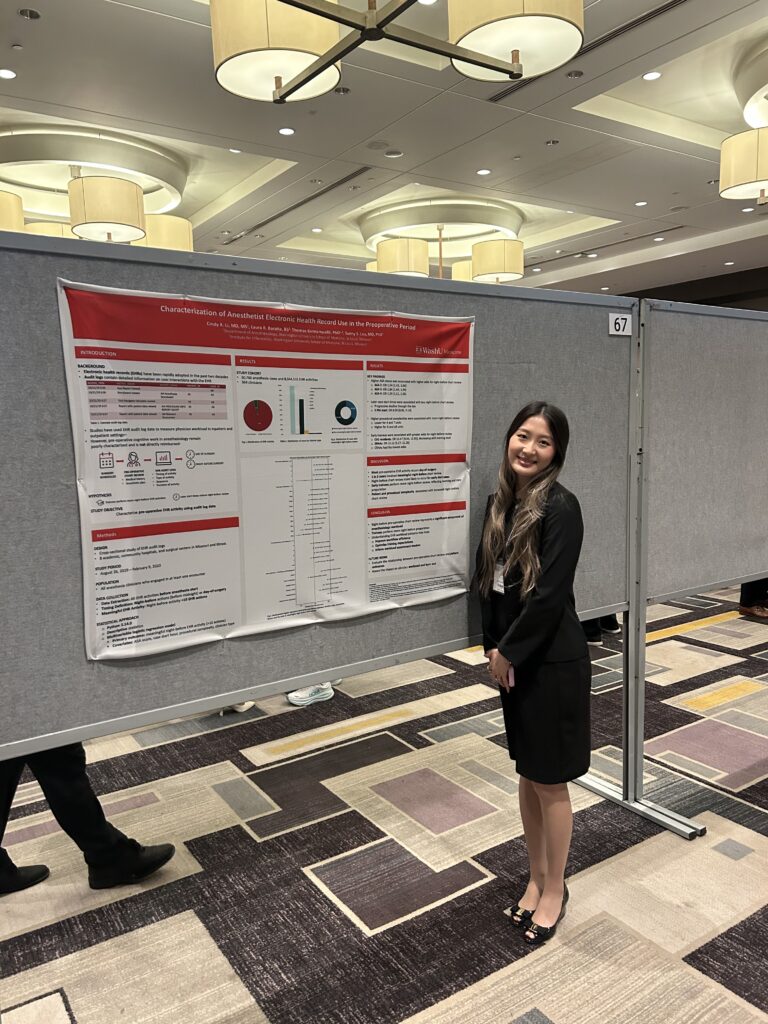
Li presented “Characterization of Anesthetist Electronic Health Record (EHR) Use in the Preoperative Period,” a multicenter study leveraging EHR audit log data to characterize real-world preoperative workflows. The study identified night-before chart review as a common and largely unreimbursed component of anesthetists’ cognitive work, particularly among trainees, and found associations with case timing, patient acuity, and procedural complexity. Together, these projects highlight underrecognized dimensions of anesthesiology workflow and point toward opportunities to improve both efficiency and perioperative care delivery.
“It was exciting to quantify something we all do every day but rarely think about—how much cognitive work happens before we ever walk into the OR,” said Li. “Understanding these patterns is an important step toward designing systems that better support anesthesiologists and trainees.”
Additionally, Lukas Matern, MD, Assistant Professor of Anesthesiology, had a virtual poster available for conference participants to view on kiosks during the poster sessions. His poster, “Peer-Led Teaching Workshops for Anesthesiology Clinician-Educators: A Model for Impactful Faculty Development,” highlights a department-built faculty development program addressing a common gap: anesthesiologists are expected to teach but rarely receive formal training. This research was developed in tandem with Rachel Moquin, EdD, Vice Chair for Academic Affairs and Professional Development, and Associate Professor of Anesthesiology, and Allison Mitchell, MD, Vice Chair for Education and Associate Professor of Anesthesiology. Their solution—a peer-led workshop series—brings faculty together to develop and deliver sessions on key topics like feedback, bedside teaching, and simulation debriefing, with mentorship and scheduling designed to fit clinical workflows. Over four years and 15 workshops, the program has improved participants’ confidence and teaching skills while remaining fully self-sustaining, requiring no external funding or protected time. The model may offer a scalable approach for other academic departments.
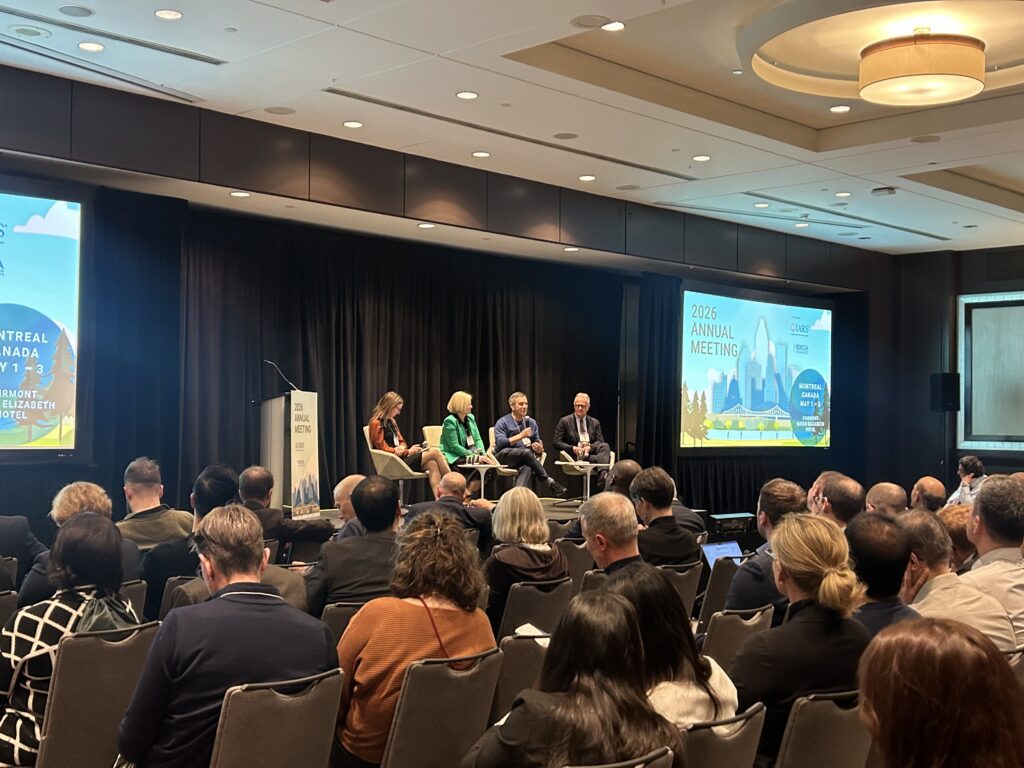
On Saturday, Alex S. Evers, MD, the Henry E. Mallinckrodt Professor of Anesthesiology and Professor of Internal Medicine and Developmental Biology, participated in a featured lunch symposium where IARS Emeritus Leaders explored the future of anesthesiology research. In a fireside chat-style session moderated by IARS President-Elect Vivianne Tawfik, MD, PhD, Evers joined Christian Werner, MD, PhD, and Beverley Orser, MD, PhD, in reflecting on the evolution of the field and the emerging scientific advances poised to reshape clinical practice. The discussion emphasized how basic and translational discoveries are increasingly converging with perioperative care.
The meeting concluded with the Kosaka Best Abstracts Session. Selected as one of nine finalists from more than 860 submissions, Mitsukuni Yoshida, MD, PhD, an ASAP Track resident in the Department of Anesthesiology, presented his study, “Whole-Brain Single-Cell Resolution Activity Mapping Identifies Mammillary Body Circuit Failure Underlying Aging, Arousal Instability, and Potential Perioperative Cognitive Risk.” His work looks at the entire brain to identify which areas are most vulnerable to aging—highlighting the mammillary body as an important region and showing that when it doesn’t function properly, it may contribute to confusion, delirium-like symptoms, and increased vulnerability in thinking and memory.
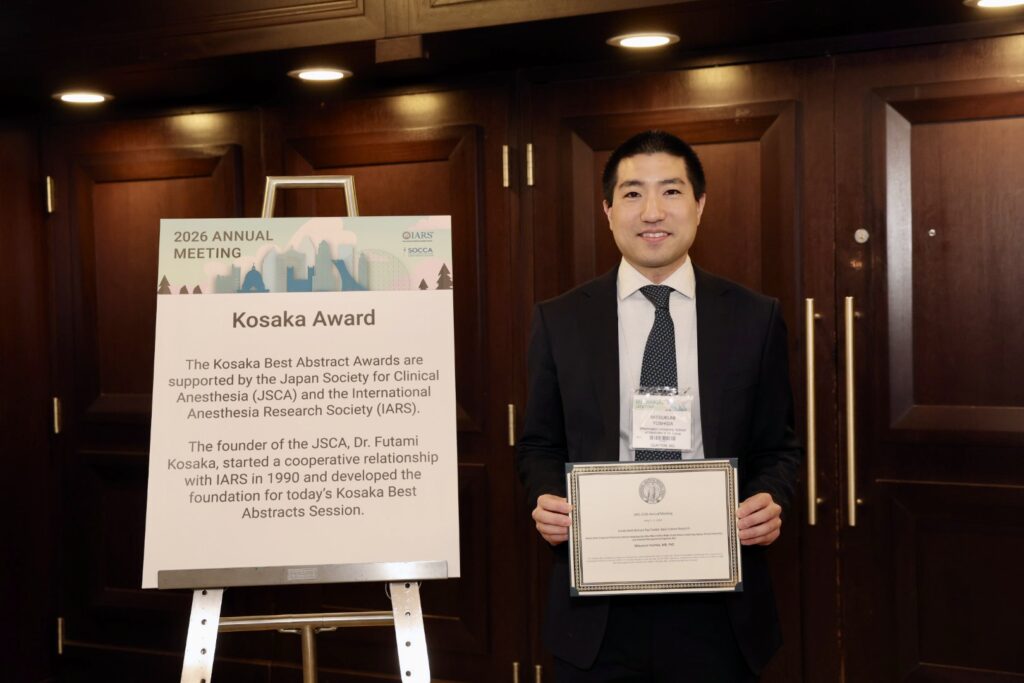
Yoshida received the Top Basic Science Award for his presentation, marking the second consecutive year he has earned this distinction in the category.
“Rather than assuming where dysfunction begins, we’re trying to identify which neural circuits are naturally most vulnerable during aging and how their failure shapes cognition and behavior,” said Yoshida. “Ultimately, the goal is to move toward a mechanistic understanding of perioperative brain vulnerability so we can better predict, prevent, and treat conditions like delirium.”
The 2026 IARS Annual Meeting offered a dynamic and engaging forum for participants to connect, share ideas, and advance the field of anesthesiology research. To learn more about the 2026 Annual Meeting and the research presented, visit the IARS website.


